


standardization - Recreate

November 27, 2025
Kjartan-Gudmundsson-KTH-2.png

Kjartan Gudmundsson, KTH

In the ReCreate project, we are working towards circular construction with a focus on the deconstruction and reuse of precast concrete elements. This is a striving for more sustainable practices with reduced carbon emissions and energy use while minimizing waste and preserving value. One challenge is to determine the condition and properties of prefabricated concrete elements, especially when we do not have the full history of the elements and sometimes even lack documentation. Standardized quality-assurance methods are therefore valuable to ensure that every reused component is evaluated for aspects such as structural integrity, durability, and safety, and in a manner that provides consistency across projects. Standardized methods also help engineers compare results, make it clearer how to meet regulatory requirements, and help us build confidence in reuse as a sustainable and technically sound practice.

Arlind and I have had the pleasure of participating in the development of a standard for the reuse of precast concrete elements with emphasis on methods for quality assurance and service-life calculations. This work, led by Jan Suchorzewski from RISE, is concerned with requirements regarding function, load-bearing capacity and durability. One of the main motivations is that we do not currently have a European standard for the reuse of prefabricated concrete elements since existing standards are only applicable for new prefabricated elements. While the new standard will draw on the Norwegian standard “Hollow Core Slabs for reuse”, it can also be used for other types of prefabricated concrete elements. The standard will provide requirements for the testing of material properties and assessment of the condition of prefabricated concrete elements. It will also provide requirements for the analysis of the remaining service life of concrete elements.
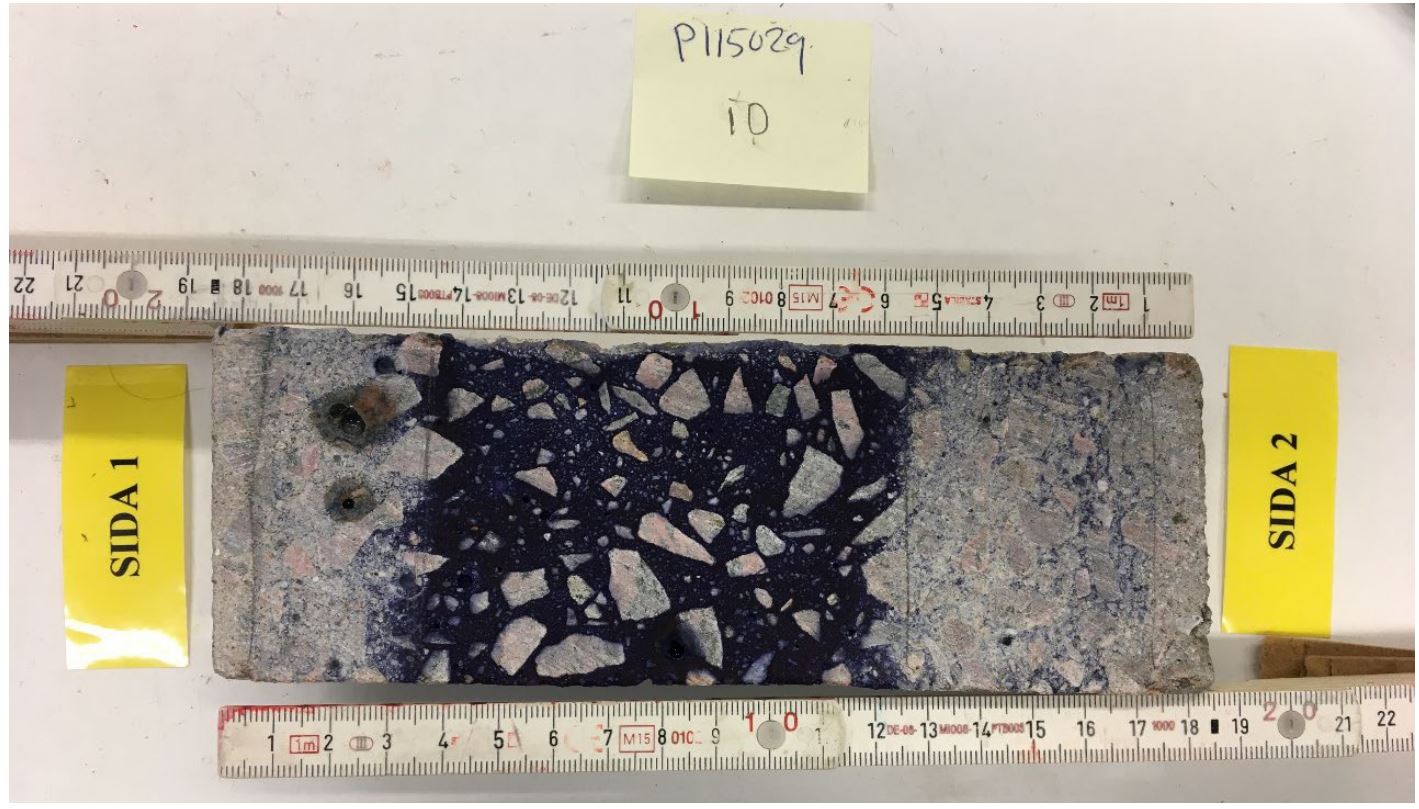
Measurement of carbonation depth of a concrete core

The element types include HDF floor slabs and massive slabs, beams and columns, TT slabs, walls, stairs and massive slab elements. In this upcoming standard, the evaluation process will include strength, load carrying capacity, durability and service life and applicability. In short, the quality assurance process consists of four steps: the analysis of technical documentation, ocular inspection and non-destructive testing, destructive testing of drill cores and service life analysis. The standard will also refer to test methods as well as the sample sizes for testing. Altogether, making reuse more manageable and thereby contributing to sustainable construction.
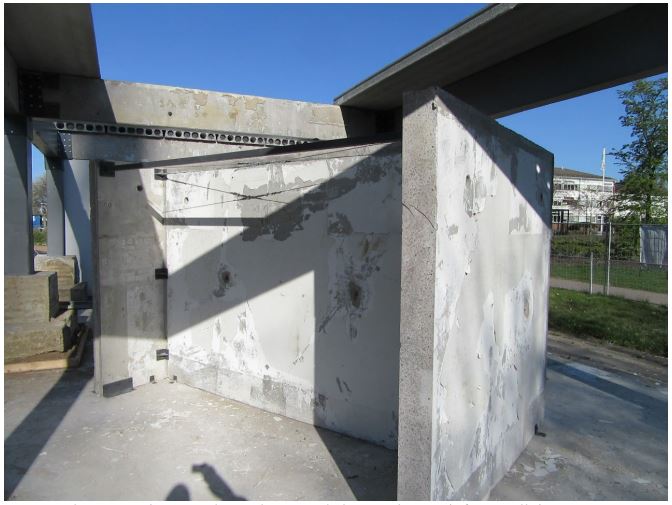
Concrete elements reused in the H22 pilot project


February 5, 2025
Arvi-Rahtola1.png

ReCreate blog post series on mapping in WP1

Post 2

Author: Arvi Rahtola, research assistant, Tampere University

To gain a broader perspective on the possibilities of reuse and ease knowledge and technology transfer across borders, one of the goals in the ReCreate project is to gather data on precast systems from various European countries. The work is not limited to the four pilot countries of the project (Finland, Sweden, the Netherlands and Germany), but also includes a selection of eastern EU member states known to have large stocks of precast concrete buildings. Beside residential building systems, the ones used in non-residential construction are of interest as well. This blog post series describes that experience. Please find here Part 1 of the series, which explains the nature of this work and describes the Polish experience. The current blog will discuss the Estonian experience, while the series will continue with Romania and Finland later on.

The Estonian experience

Master’s student of architecture Arvi Rahtola joined the ReCreate research team at Tampere University as a research assistant for a ten-week sprint in the summer of 2024, with guidance provided by project researcher Niko Kotkavuo, to collect material on the precast building systems of Estonia. This blog gives the personal account of his involvement and the challenges he encountered while studying the systems:

Challenges with mapping Estonian Soviet concrete construction systems were mainly related to the country’s rather small size. When country is so small that in most fields everybody knows everybody by name, very few things are written down. As a starting point, the available Estonian sources were mainly blogposts, old news articles, or commercial publications on insulating existing residential buildings. Even though the initial material was narrow, it led me to archives, which turned out to be well organized and easy to access.

Finding enough material didn’t turn out to be a problem. The design bureau responsible for designing most Soviet prefabricated housing left behind a large amount of records. Some type building series had over 200 folders of material to go through. The information I was looking for was hiding in four or five of them. Additionally, some of the archived material had unfortunately deteriorated to the point of uselessness. The main challenge turned out to be locating the relevant files while hoping they were in a usable condition.

Processing the found material ended up being a challenge. Having been part of the Soviet Union, where the main language of state and business was Russian, the found archival material was also written in Russian. During the process of finding material and interpreting the blueprints, I got to extend my vocabulary related to precast concrete construction.

Residential buildings in Soviet Estonia were built by the Union wide ‘type project’ system. This means that the same building could be found in Estonia or Kazakhstan. During all the Soviet period, Estonian prefabricated concrete housing was compiled of only few different Union-wide systems and two ‘homegrown’ ones. Compared to many other nations, everything in these buildings was strictly standardized, which made the review work easier.

An interesting aspect of Estonian elements is the use of ‘silicalcite’ concrete and the use of shale oil ash to replace cement. This was mostly because the concrete industry was already struggling to produce enough cement during the years of reconstruction after the Second World War. By using unorthodox materials, building capacity was increased, when ordinary materials were in short supply.

Most of the reuse knowledge about the pan-Soviet systems like the 1-464, or the 111-121, are also hopefully more widely useful. The former was in use everywhere in the Soviet Union, and the latter was also used in many areas; for one in Kyiv, Ukraine.


EU FUNDING

“This project has received funding from the European Union’s Horizon 2020 research and innovation programme under grant agreement No 958200”.

Follow us: