
Finalevent - Recreate

September 25, 2026
Final-Conference-12-1280x640.png

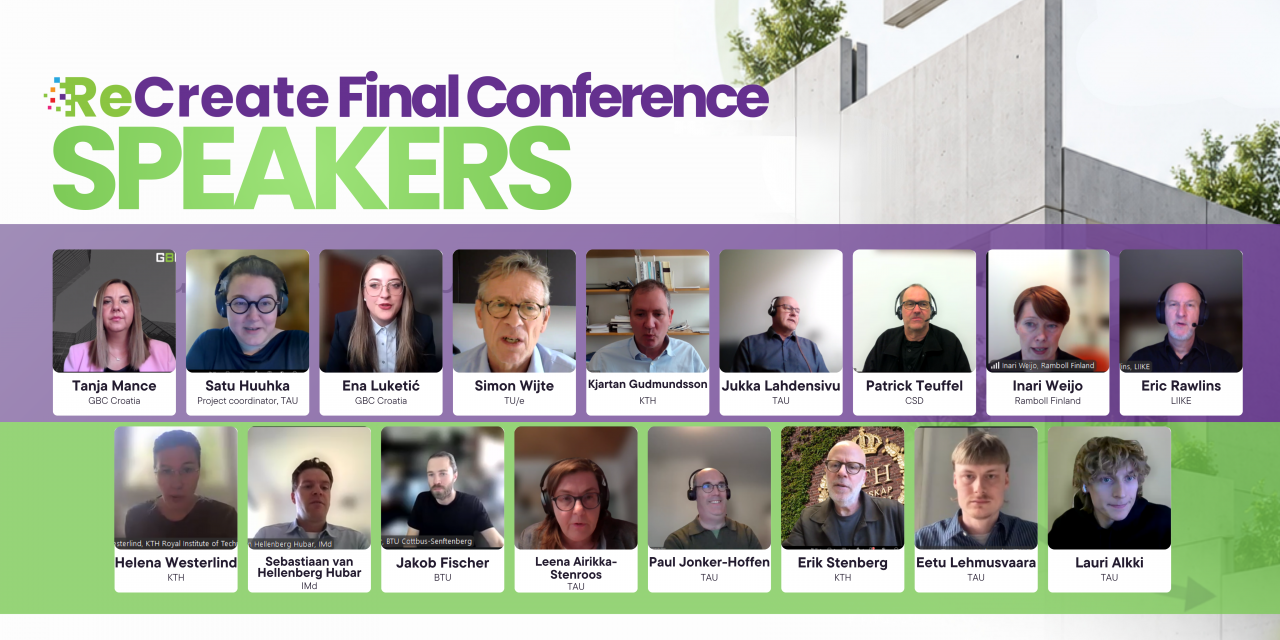
The ReCreate Final Conference took place online on 23 September 2026. Over three hours, the project partners showed what came out of five years of work on reusing precast concrete elements. They also discussed what still has to change for reuse to become normal practice. The conference was organised by GBC Croatia and brought together 155 participants from 26 countries.

Why reuse?

Project coordinator Satu Huuhka (Tampere University) opened by setting the scale of the problem. Human-made mass now exceeds all living biomass on Earth. Cement alone is the third-largest source of human-made CO₂ emissions. ReCreate’s answer is to treat existing precast concrete buildings as a source of building elements, not as waste to be crushed.

What ReCreate developed

The first panel, moderated by Ena Luketić (GBC Croatia), followed a single concrete element on its journey. It starts in the donor building, goes into a database and through quality checks, and ends up in a new design. Each panelist led one step of that journey in ReCreate:

  • Simon Wijte (TU/e) on deconstruction
  • Kjartan Gudmundsson (KTH) on digital tools and tracking
  • Jukka Lahdensivu (TAU) on quality assurance
  • Patrick Teuffel (CSD) on redesign and reassembly
Four countries, four demonstrator stories
  • Finland: Inari Weijo (Ramboll Finland) and Eric Rawlins (LIIKE) presented the Finnish cluster. About 260 elements were salvaged from a 1982 office building in 2023. They were then reused in four pilots: two residential buildings, an industrial building and the Sammonkatu exhibition pavilion in Tampere. The pavilion was built in 2026 from 30 columns, 6 beams and 5 hollow core slabs.
  • Sweden: Helena Westerlind (KTH) presented the Swedish pilots, including the H22 exhibition pavilion.
  • The Netherlands: Sebastiaan van Hellenberg Hubar (IMd) presented the Circular Centre Netherlands office building. It is built from elements of the deconstructed Prinsenhof building in Arnhem. The main lessons were that the elements have to sit at the centre of the design, and that it pays to keep things simple, because every adjustment adds cost. A full-size mock-up was used to test the structural design, the tolerances and the connections.
  • Germany: Jakob Fischer (BTU Cottbus-Senftenberg) presented the extension of the Kolkwitz sports club, built with 80 elements from a donor building about 40 km away. He also presented the youth centre in Hohenmölsen, which will reuse 484 elements. It is set to become the largest reuse project with precast concrete elements in Germany.
Cross-cutting lessons

The second panel stepped back from the individual pilots. It asked what holds true across all of them, once the technical side is solved. The topics were:

  • business models and value chains (Leena Aarikka-Stenroos, TAU)
  • policy, legal, social and organisational conditions (Paul Jonker-Hoffrén, TAU)
  • architecture, design and acceptance (Erik Stenberg, KTH)
  • the project-wide synthesis (Satu Huuhka)
From pilots to wider practice

Lauri Alkki and Eetu Lehmusvaara (TAU) summed up the key lesson: reuse is technically feasible, but it challenges existing processes and project logics.

The main bottlenecks they identified are:

  • quality assurance, permitting, certification and liability are not yet standardised
  • demand is weak and fragmented
  • costs and risks are unevenly distributed along the value chain

To guide the way forward, ReCreate developed a roadmap built on five developments:

  1. reuse becomes financially competitive
  2. new partnerships form around element reuse
  3. digital solutions support reuse
  4. circularity becomes a core design principle
  5. new professional competences emerge
An engaged audience

Participants kept the Q&A and chat busy all afternoon. Questions covered element refurbishment, connections, storage hubs, insurance, design for disassembly and whole-life carbon.

Missed it? Watch the recording

The full conference recording is available on YouTube: https://www.youtube.com/watch?v=qnaJS6lShxo

The reports mentioned during the conference are available in the Resources section of this website.

Thank you to all speakers, partners and participants who joined us!

September 7, 2026
Final-Conference-5-1280x640.png

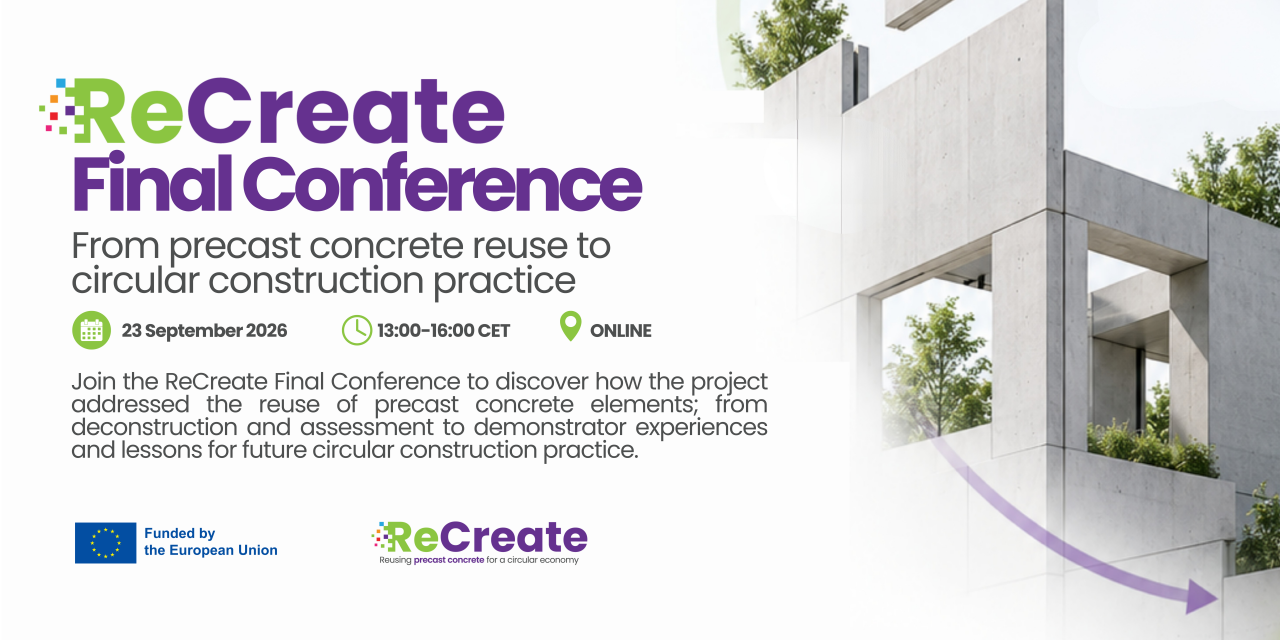
The ReCreate project is coming to its final conference, bringing together the key results, experiences and lessons learned from several years of research, development and demonstration work on the reuse of precast concrete elements.
ReCreate explores how precast concrete elements from existing buildings can be identified, deconstructed, assessed, documented, redesigned and reused in new construction.
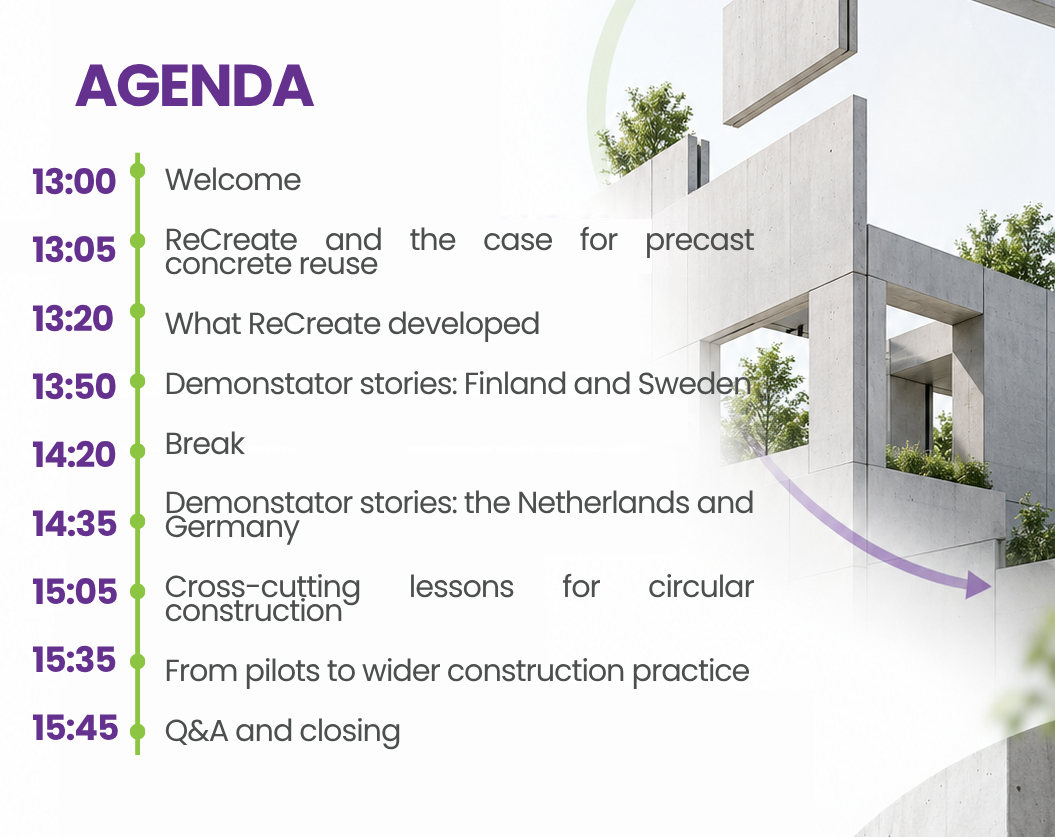
At the final conference, project partners will present the key results, practical demonstrator experiences from Finland, Sweden, the Netherlands and Germany, and the main lessons learned for circular construction practice. The detailed agenda is provided below.

The event is free and open to everyone interested in circular construction, resource efficiency and low-carbon building practices, including professionals, researchers, public authorities, policymakers, students and other stakeholders.
Register for the online conference using the link below and join us to discover what ReCreate has developed, tested and learned about bringing precast concrete reuse closer to practice.

REGISTER HERE


September 3, 2026
ReCreate-presentations-left-to-right-Antti-Lantta-Tero-Niemela-Inari-Weijo-Juha-Ramo-Eric-Rawlins-Satu-Huuhka-1280x720.jpg

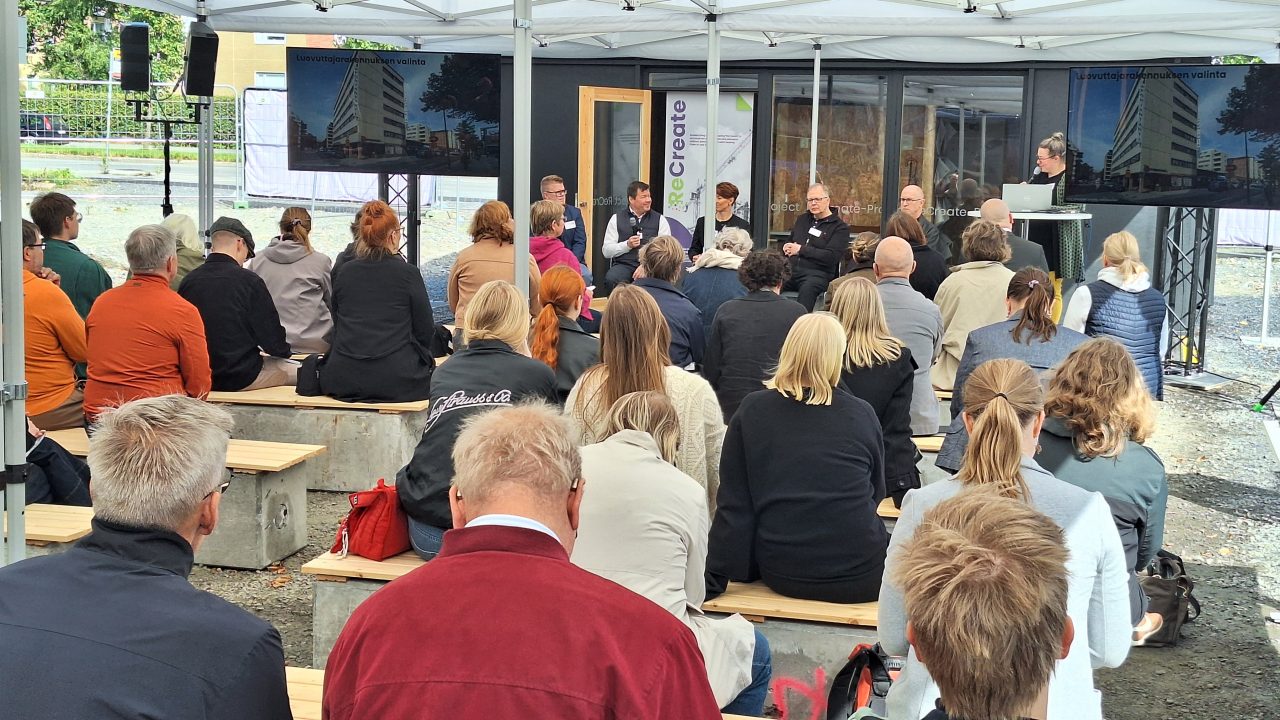
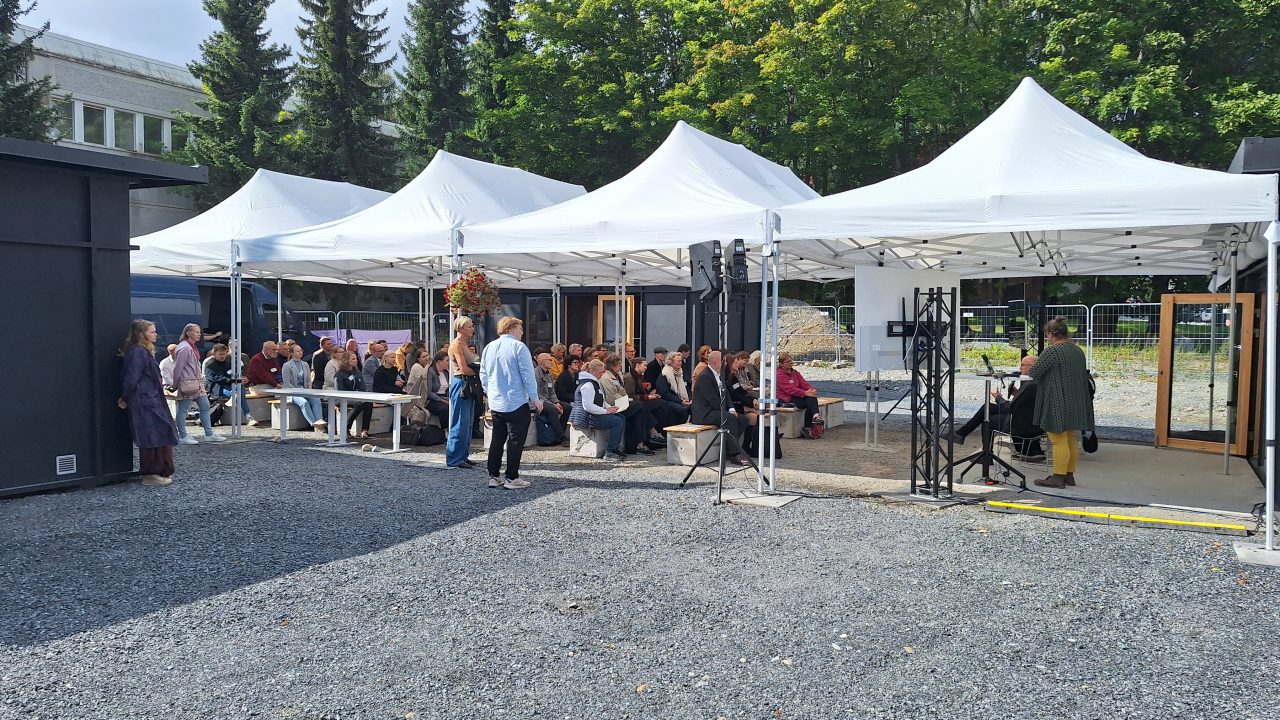
The circular economy in the built environment is taking another important step forward. The professional day organised by ReCreate’s Finnish cluster, which also served as the project’s national final event in Finland, brought together construction industry experts, researchers, and practitioners to discuss the reuse of concrete elements reclaimed from buildings slated for demolition, as well as the related opportunities and challenges. 

The event was opened by two influential speakers – Deputy Mayor Ilkka Porttikivi from the City of Tampere, responsible for the Urban Environment and Infrastructure Services committees, and Finland’s Minister of the Environment and Climate Sari Multala (via video). Both speakers reminded the audience about the importance of circular economy and the construction sector in the face of the environmental challenges of today. 

Throughout the day, participants heard timely presentations and examples from ReCreate’s Finnish members on how concrete elements reclaimed from end-of-life buildings can be reused as part of the low-carbon construction of the future. Discussions particularly emphasised the successful technical implementation of the process, reducing the carbon footprint of construction, and business opportunities in the circular economy. 

The ReCreate project is developing operational models and solutions that enable the reuse of concrete elements safely, efficiently, and economically. The goal is to reduce the use of virgin materials and promote the construction industry’s transition toward operations genuinely based on the circular economy. 

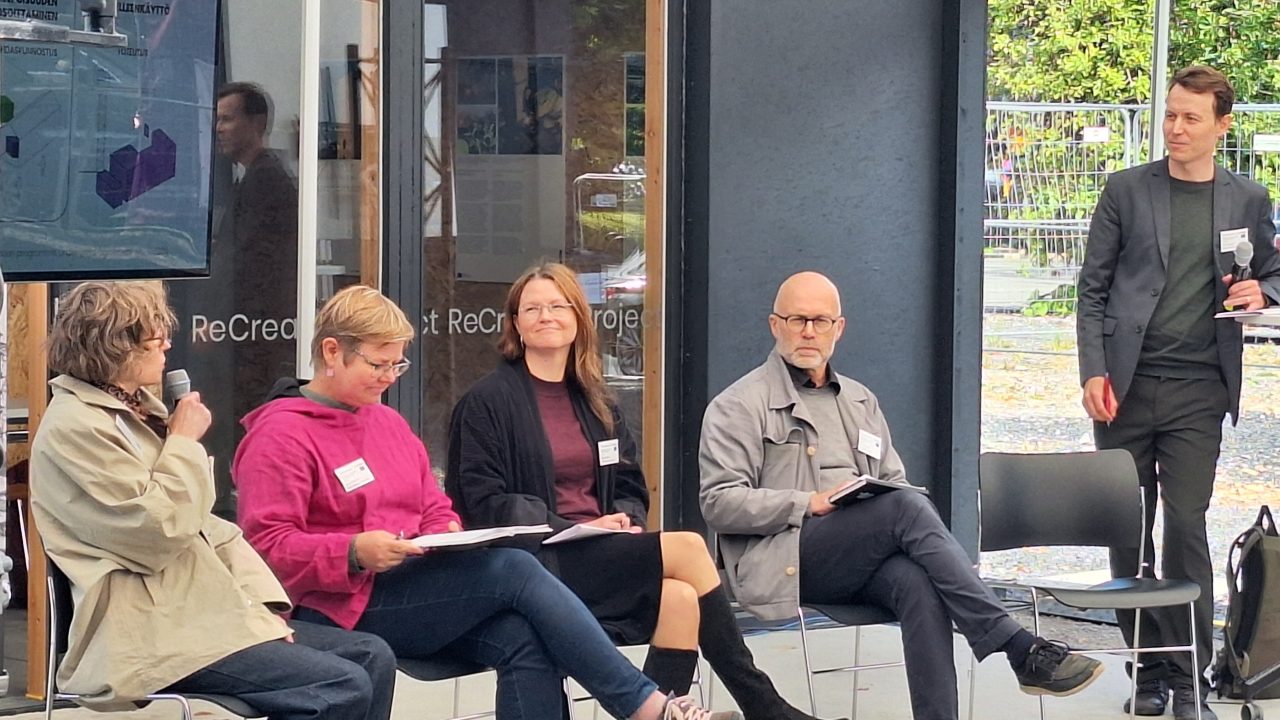
The event concluded with an inspiring panel, hosted by Green Building Council Finland’s Antti Ruuska, where four influential guests discussed how to advance the mainstreaming of circularity in construction. Member of parliament Krista Mikkonen pointed out that better regulation needs to be introduced so that construction sector actors willing to adopt environmentally friendlier solutions are not punished by higher costs. The other panelists – senior architect Harri Hakaste from the Finnish Ministry of the Environment, head of urban development Saara Melama from a major landowner company Hiedanrannan Kehitys Ltd, and sustainability adviser Mirkka Rekola from Senate Properties, also provided various insights into the topic. 

The professional event held in Tampere, Finland on August 24, 2026, provided participants with valuable information on the project’s progress, research findings, and practical experiences from pilot sites. In addition, the event served as an excellent forum for networking and collaboration among various stakeholders. 

Were you unable to attend? Watch the recording 

If you were unable to attend the event in person or would like to revisit the day’s most interesting presentations, you can now watch the recording of the Professionals’ Day at a time that works best for you. 

Through the recording, you’ll gain insight into the latest perspectives and solutions in the industry and learn how the reuse of concrete elements can accelerate the construction industry’s transition to sustainability and open up new opportunities for future projects. 

Watch the recording (Finnish language only) and stay involved in building the future of the circular economy. 

Text: Petri Kähkönen, Consolis Parma & Satu Huuhka, Tampere University 

Event photos: Petri Kähkönen, Consolis Parma. 


EU FUNDING

“This project has received funding from the European Union’s Horizon 2020 research and innovation programme under grant agreement No 958200”.

Follow us: