


Introduction to the report: Building, component, and connector typologies of precast concrete building systems of the ReCreate project. The full report is available here.
Erik Stenberg, KTH
What kinds of different precast concrete elements (PCE) are there out there and what do we call them?
The Recreate report D1.2 Building, component, and connector typologies of precast concrete building systems explores how precast concrete elements (PCEs) can be organized and named more effectively. To support reuse, it proposes a simple way of organizing knowledge about these elements at three different scales: 1. the building scale, 2. the component scale, and 3. the connector scale. Looking at PCEs across these scales helps describe how they relate to one another and how their physical characteristics influence reuse.
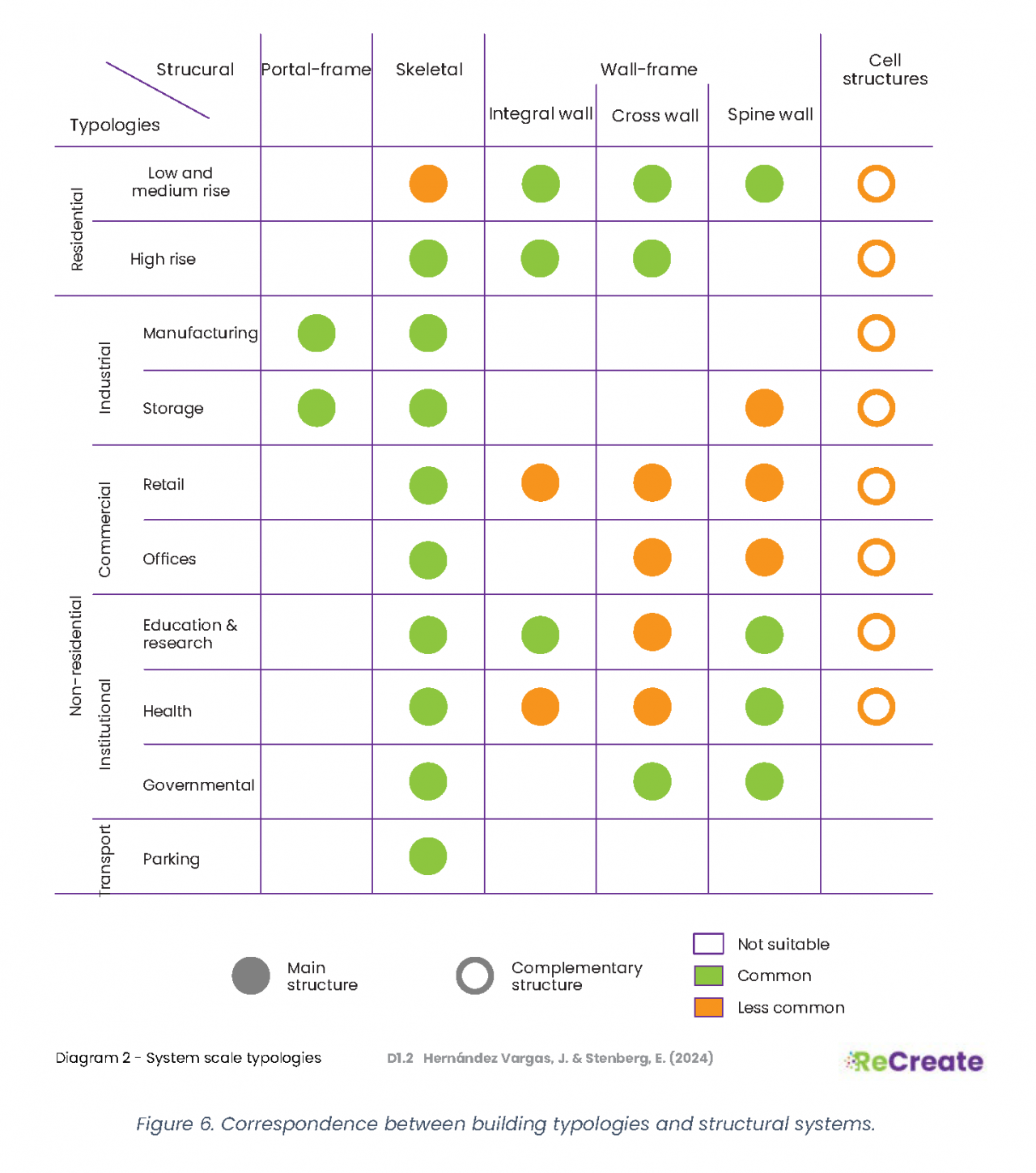
The report introduces an ordering system and naming convention for PCEs. Diagrams and short explanations show how elements behave and interact at each scale. Key diagrams summarize the main findings at three scales separately and then combined into one shared system for naming and understanding reused precast elements.
A key step in enabling reuse is understanding the material and functional characteristics of PCEs. This step is often overlooked. In this report, both quantitative data (such as dimensions and structural capacity) and qualitative aspects (such as typology or function) are analyzed at the three scales to show how they influence reuse.
At 1. The building scale, precast elements are part of a larger structural and functional system. The way elements are combined affects what kinds of buildings they can form. In turn, building types also influence which element types are suitable. For example, certain structural systems or building layouts work better with specific precast elements.
At 2. The component scale, the report examines the properties of individual precast elements. These include their form, dimensions, and historical use. Information from past building practices and Building Information Modeling (BIM) is compared to better understand typical element types and how they might be reused.
At 3. The connector scale, the focus is on how elements are joined together. The type of connection affects how easily elements can be assembled, disassembled, and reused. Some elements are more compatible with certain connectors than others.
Together, these three scales show how elements, connections, and building systems are closely linked.
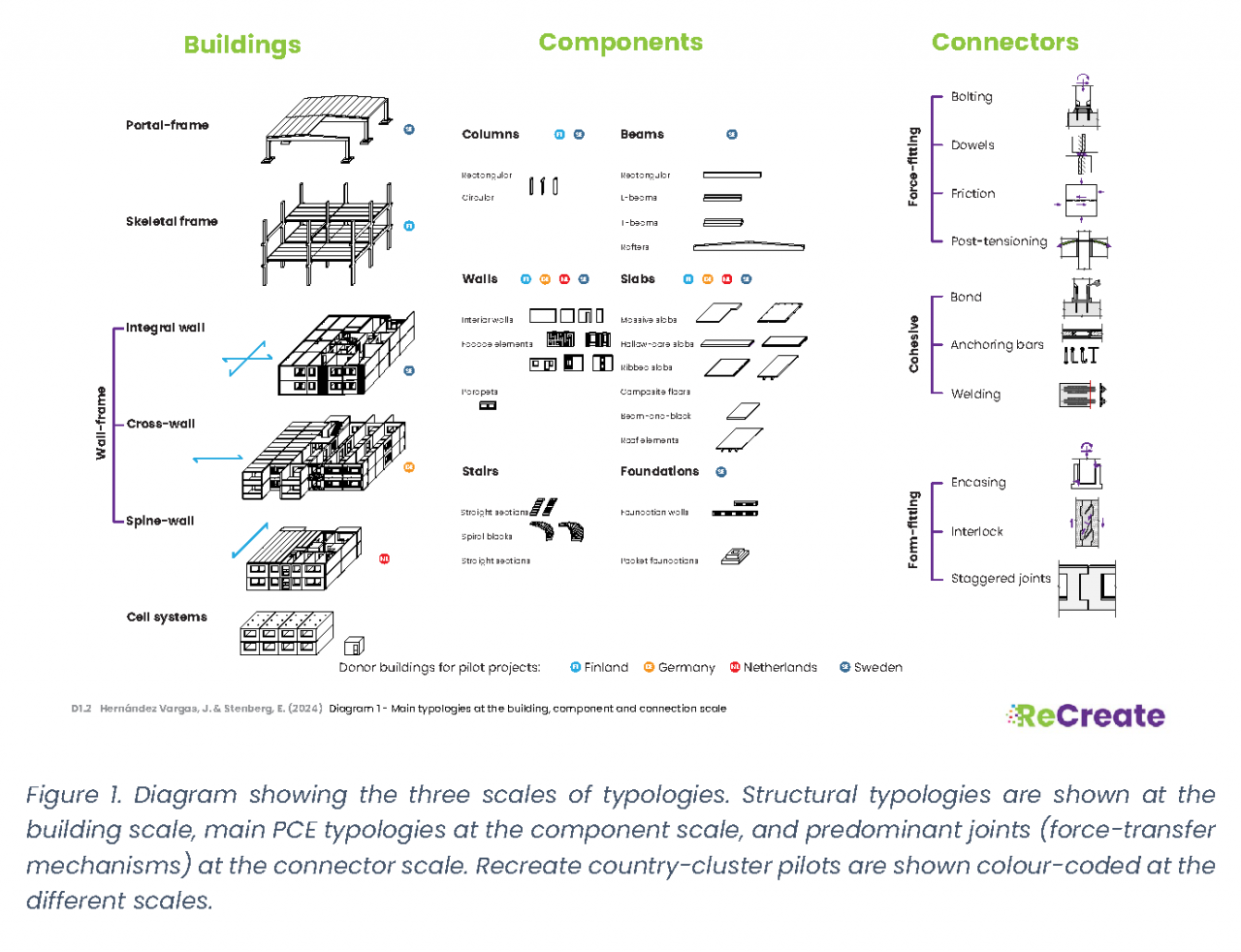
The report also proposes a common nomenclature for describing PCEs across the three scales. This naming system provides basic categories for identifying and classifying elements. The typological names used in the diagrams and charts act as references that help interpret and categorize elements.
Overall, this work is an early step toward creating a taxonomy of precast building systems. This taxonomy provides a framework for classifying precast systems, elements, and structural details. In the future, it will serve as a shared knowledge base that supports the reuse of precast concrete elements and the development of digital databases of reusable building components.