


Authors: Arianna Fonsati, Arlind Dervishaj and Kjartan Gudmundsson
Department of Civil and Architectural Engineering, KTH Royal Institute of Technology, Stockholm, Sweden
The transition toward a circular economy in the construction sector requires reliable methods for documenting, verifying, and exchanging information about reusable building components. While the reuse of structural elements, such as precast concrete slabs, can significantly reduce embodied carbon emissions and construction waste, its large-scale adoption is often hindered by insufficient and inconsistent information on component quality, performance, and compliance.
This study investigates how openBIM standards can support digital validation processes for reusable building components. Specifically, it explores the use of the Information Delivery Specification (IDS), a buildingSMART standard, to automate validation of Industry Foundation Classes (IFC) models representing precast hollow-core slabs intended for reuse. The methodology is tested against the Norwegian standard NS 3682:2022, which defines quality assurance requirements for the reuse of hollow core slabs.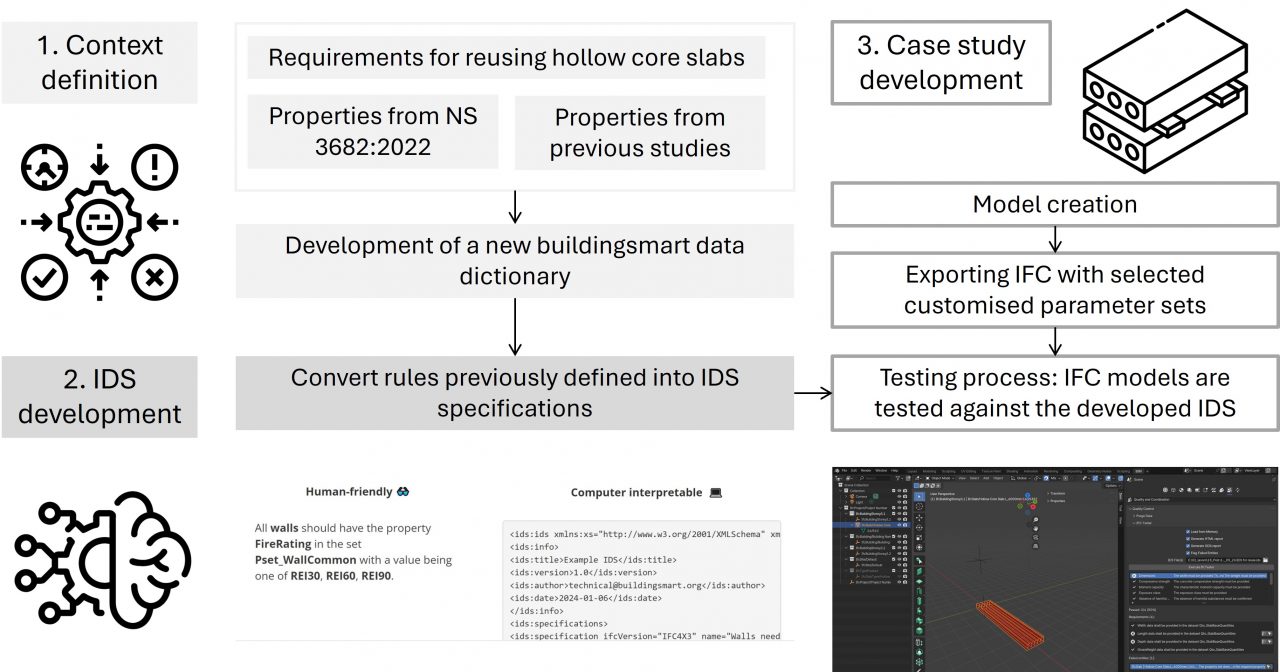
Figure 1: Approach involving three main steps
The proposed approach consists of three main steps (Figure 1). First, information requirements for reusable slabs are identified from NS 3682:2022 and complementary research. These requirements include geometric characteristics, structural properties, durability indicators, manufacturer information, and verification records. Second, the requirements are translated into machine-readable IDS specifications linked to IFC entities and standardised through a dedicated buildingSMART Data Dictionary (bsDD). Finally, the resulting IDS is applied to an IFC model of a hollow core slab to automatically assess compliance. A case study was developed in Autodesk Revit to create an IFC4x3 model of a hollow-core slab. Validation was carried out using the open-source Bonsai add-on for Blender. The results demonstrate that IDS effectively verifies the presence and structure of required information within IFC models. The validation process successfully identified missing or incorrectly mapped properties, enabling users to quickly detect data quality issues and improve model consistency.
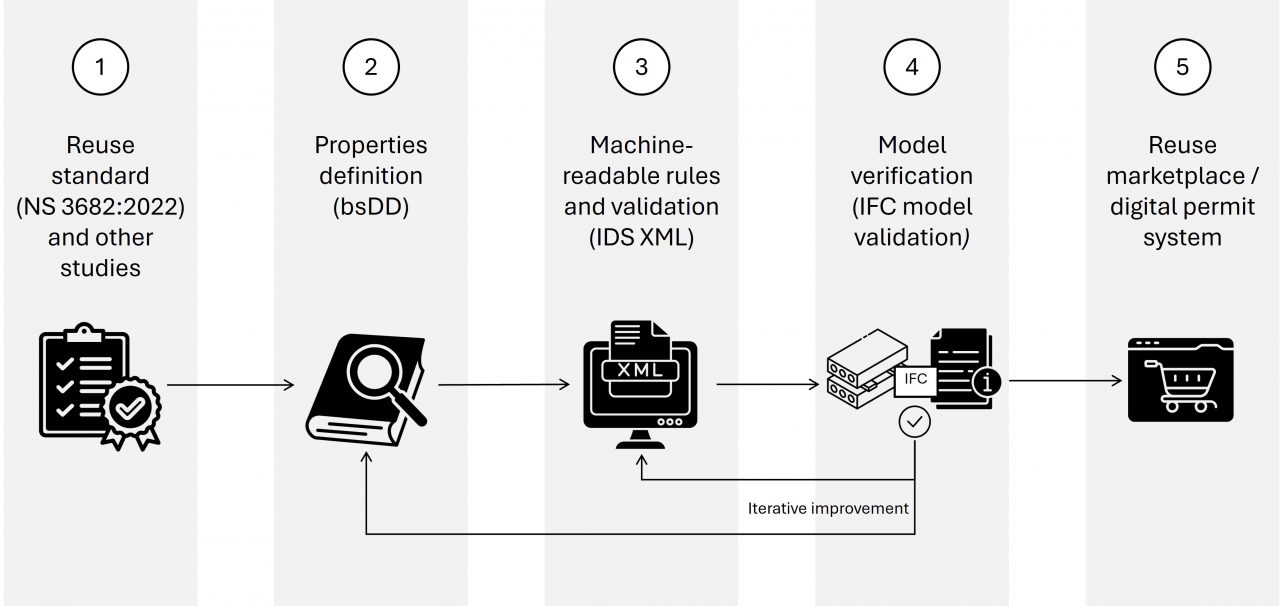
Figure 2: Conceptual workflow connecting bsDD, IDS and IFC validation for reuse
Figure 2 shows the proposed digital workflow for validating reusable building components through openBIM standards, connecting bsDD, IDS, and IFC standards. The bsDD provides semantically consistent property definitions, IDS translates these requirements into validation rules, and IFC serves as the container for the digital representation of the building component. Together, these standards create a transparent and interoperable workflow that can support digital inventories and online marketplaces for reclaimed construction products.
The study also highlights several limitations. IDS can verify whether required information is present but cannot assess the accuracy or reliability of the underlying data. Physical inspections, testing procedures, and expert judgment therefore remain essential components of reuse assessment. Furthermore, the successful implementation of IDS depends on stakeholders’ digital capabilities and the quality of IFC models, which may present challenges for smaller organisations.
Despite these limitations, the research demonstrates that IDS is a promising tool for advancing digital validation in circular construction. By translating human-readable reuse requirements into machine-readable rules, the approach improves transparency, interoperability, and trust in reuse processes. Beyond hollow core slabs, the methodology could be extended to other building components and integrated into digital marketplaces, material passports, and regulatory compliance systems. Ultimately, the framework contributes to a more data-driven and sustainable management of building materials, supporting the broader transition toward a circular built environment.