
Work package 2 reports explained
Authors: Simon Wijte, TU/e & Marcel Vullings, TNO
Introduction to the reports:
- Real-life deconstruction pilots of the ReCreate project. The full report is available here.
- Best practice guidelines and recommendations for reuse-optimised deconstruction. The full report is available here.
- Guidelines for a BIM-aided pre-deconstruction audit. The full report is available here
The Recreate project is about the reuse of reclaimed precast concrete elements in new building structures. Reclaimed elements are derived from a donor building, i.e. a building that is slated for demolition but that will instead be deconstructed in a way that precast concrete elements become available for reuse. In ReCreate, experience has been gained with the application of reuse in four piloting countries: Finland, Sweden, Germany and the Netherlands. The project’s pilots consist of two phases: deconstruction pilots and reuse pilots. In the project’s Work Package 2, the lessons learned from the deconstruction are presented. The donor buildings and their deconstruction are described in the report “Real-life deconstruction pilots of the ReCreate project”. The structures in all these donor buildings consist of precast concrete elements.
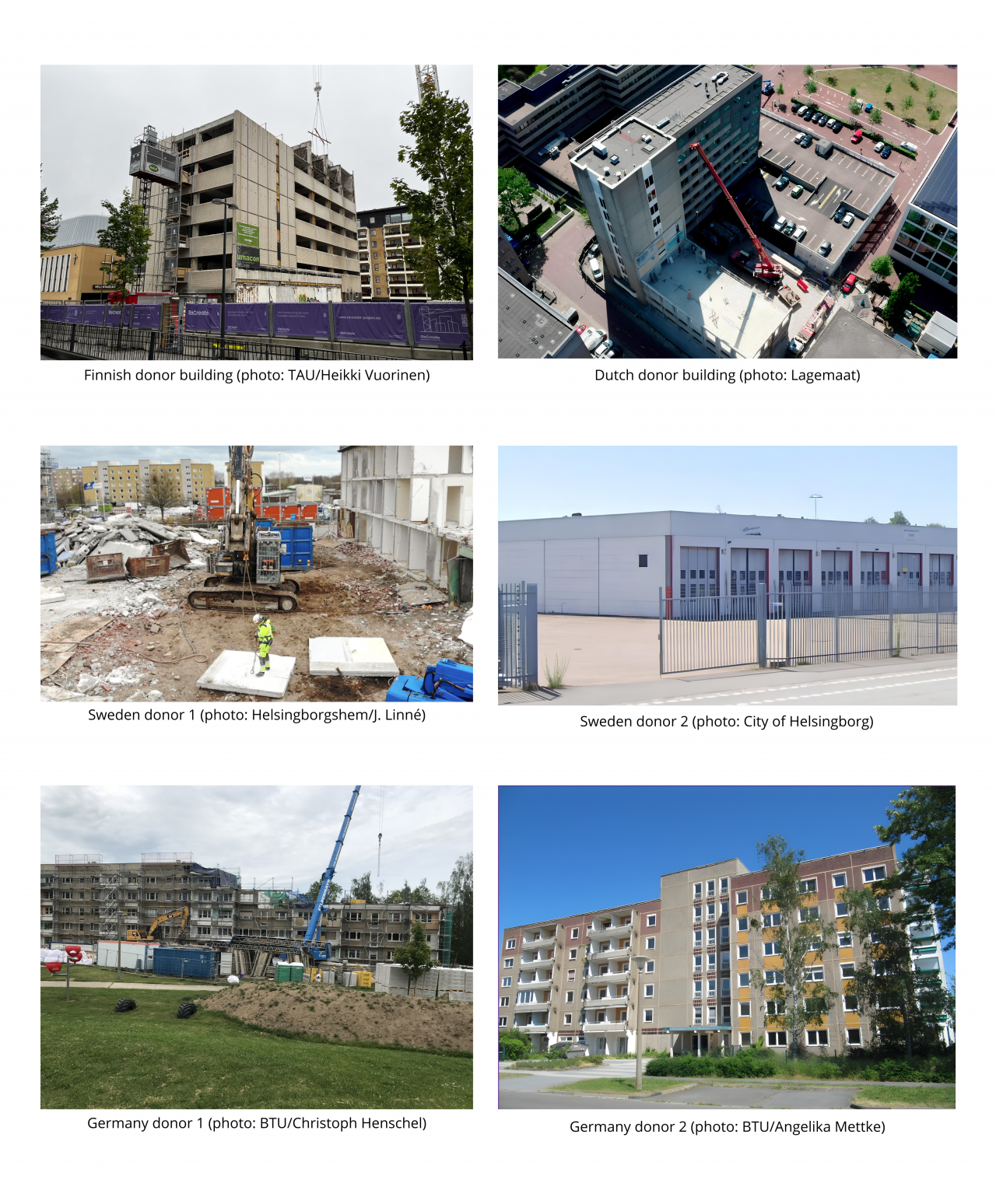
The report provides an elaborated description of each donor building, its structure, and the methods used in the deconstruction, as well as an inventory of the precast concrete elements that were successfully reclaimed. The precast structures in the donor buildings were not originally designed for disassembly. Therefore, deconstruction is done by sawing or drilling the elements in or close to original connections or joints between the elements. Another method applied, is removing the concrete in joints and cutting welded rebar connections, for instance, with torches.
Lessons learned from the execution of the deconstruction pilots have been laid down in the report “Best practice guidelines and recommendations for reuse-optimised deconstruction”. The deconstruction process can be separated into four main phases: (1) pre-planning, (2) structural deconstruction planning, (3) deconstruction work planning, and (4) implementing the deconstruction. Pre-planning includes a pre-deconstruction auditing, in which it is determined which precast concrete elements have a sufficient quality and make them suitable for reuse. A structural deconstruction plan sets the foundations for a safe and efficient deconstruction process. It defines the deconstruction sequence based on structural stability and determines the need for temporary support, among other tasks. A deconstruction work plan, devised by experts of the deconstruction company, translates the structural deconstruction plan into the work processes: both the overall deconstruction process as well as element type specific processes. The work processes include aspects like workforce, equipment, work safety, site planning, and scheduling.
Several findings gained during the deconstruction of the pilots are reported. They consist of methods of deconstructing different types of precast elements; avoidable mistakes that were made during the deconstruction and may influence the reusability (or at least the effort and cost of reuse) of the reclaimed elements; the types of damage that is not easily preventable but an inherent part of deconstruction; and the influence of weather conditions on the deconstruction work. The deconstruction methods not only include typical construction methods but also newly developed methods and tools, specifically tools for removing and lifting the reclaimed elements.
The ReCreate project teaches that information is an important key for success. A lack of information will make a structurally reliable reuse very difficult. Collecting information from different locations and sources already starts during the pre-deconstruction audit. The report “Guidelines for a BIM-aided pre-deconstruction audit” gives instructions how to conduct the pre-deconstruction audit, and how the acquired information can be stored and reliably linked to each physical element in a way that it remains linked after the deconstruction. One proposed way of achieving this is the use of a BIM model, which references an element database. The report also touches upon in-situ inspections and tests, as well as digital scanning of the building or the structure.
Together, the three reports describe all the experience and insight gained from the preparation and execution of deconstruction activities for the several pilot projects with the ReCreate project. They are useful resources for deconstruction companies, structural designers, and clients interested to reclaim precast concrete elements for reuse from end-of-life buildings.